
- Adaptive automation workflows
- Granular policy control
- Extensive third-party ecosystem
Risk Management Built to manage risk before it becomes an issue
Reduce disruption before it happens. N-central and N-sight deliver proactive risk management solutions that secure endpoints and support long‑term business continuity.
Managing cyber risk just got a whole lot easier
Continuous asset discovery
Gain real-time visibility across all endpoints. Automatically detect and onboard new assets to close visibility gaps and support your risk assessment strategy.

Built-in vulnerability management
Continuously scan 900+ apps across Windows, macOS, and Linux to surface the threats that matter most. With CVE, CVSS, CISA KEV, and EPSS context, see what’s exposed and actively exploited without added complexity.
Automated patch deployment
Keep systems updated without manual intervention. Deploy patches across operating systems and third-party applications to close known security gaps.
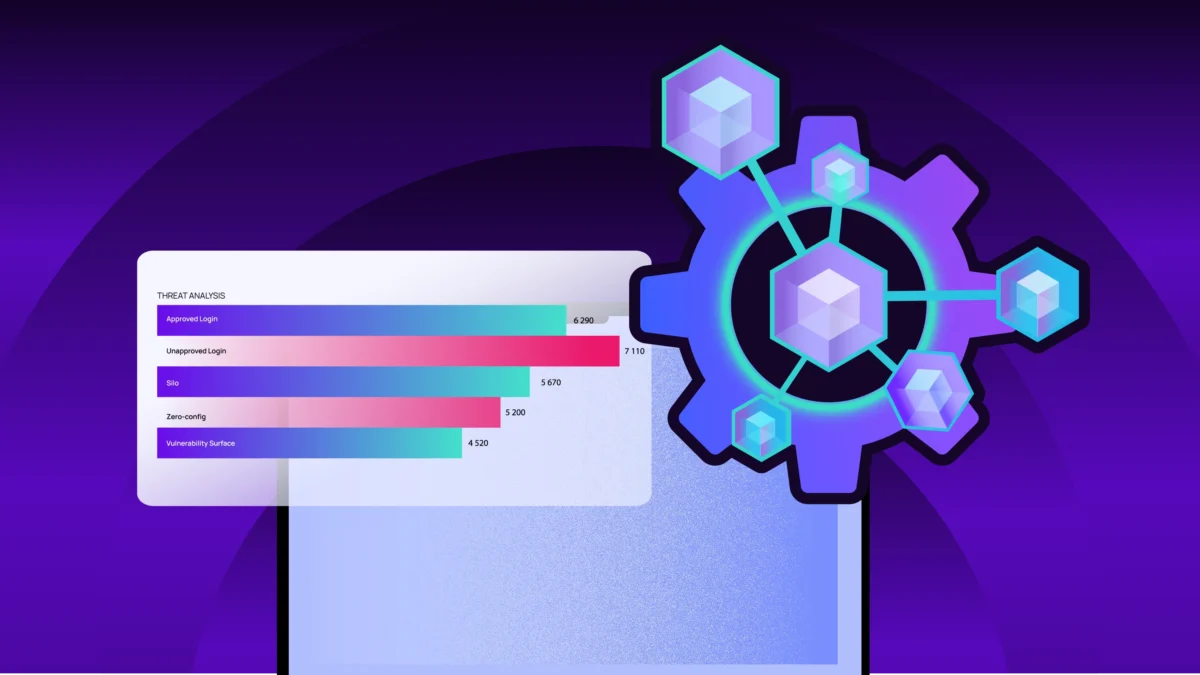
Autonomous endpoint hardening
Transform endpoints into a reliable line of defense. Enforce autonomous security policies, detect configuration drift, and reduce the attack surface to maintain compliance safely.
Guided vulnerability intelligence
N-zo Vulnerability Expert cuts through the noise, combining severity, context, exposure, and active exploits to surface real risk and deliver clear, prioritized actions in seconds.

Intelligent patch guidance
N-zo Patch Expert turns complex patch signals into clear answers. Know what to patch, why it matters, and what to do when patches fail, without digging through logs or advisories.
Get ahead of risk with the right endpoint management software
N-central Endpoint Management
Deep customization and enterprise-grade scale for complex networks.
N-sight Endpoint Management
Rapid deployment and all-in-one simplicity for growing IT teams.
- 100% cloud-native architecture
- Intuitive no-code automation
- Built-in ticketing and billing
FAQs
What is the role of risk management in business continuity?
What is the role of risk management in business continuity?
Risk management plays a proactive role in business continuity by reducing the likelihood and impact of operational disruptions before they occur. Unified endpoint management solutions such as N-central and N-sight help establish a secure operational foundation by identifying threats early and hardening endpoints.
These platforms continuously monitor the IT environment, surface configuration anomalies, and deploy critical updates without manual intervention. By addressing risks early, the software helps keep systems available and operations running smoothly as cyberthreats evolve.
What is the difference between N-central and N-sight for risk management?
What is the difference between N-central and N-sight for risk management?
The choice between N-central and N-sight depends primarily on the scale, customization needs, and complexity of the IT environment being managed.
Both platforms provide robust asset discovery, continuous vulnerability management, and automated patching.
- N-central: Designed for complex networks, offering deep customization, advanced policy control, and enterprise-grade scale for mature MSPs and IT teams.
- N-sight: A 100% cloud-native architecture that delivers all-in-one simplicity, rapid deployment, and intuitive no-code automation for growing MSPs and IT departments.
Does the software integrate with other security applications?
Does the software integrate with other security applications?
N-able delivers end-to-end cybersecurity and IT solutions that connect endpoint management with threat detection, cloud-native backup systems, and other critical IT operations.
N-central and N-sight share telemetry with Adlumin Security Operations and Cove Data Protection. This integration connects proactive risk management with incident response and backup strategies, offering organizations a coordinated defense that minimizes the attack surface and supports rapid recovery during disruptions.
How does automated patching assist in managing cybersecurity risk?
How does automated patching assist in managing cybersecurity risk?
Automated patching assists in risk management by consistently closing known security gaps across operating systems and third-party applications without requiring manual technician intervention.
By deploying scheduled or on-demand updates across Windows, macOS, Linux, and third-party applications, automated patching significantly reduces the available attack surface. This proactive control helps keep systems protected against easily exploitable vulnerabilities, maintaining a hardened and compliant IT environment.
What is the N-zo Vulnerability Expert?
What is the N-zo Vulnerability Expert?
The N-zo Vulnerability Expert is a built-in AI capability in N-central and N-sight that prioritizes vulnerabilities using severity, device context, exposure signals, and active exploitation status, including CISA KEV. Teams can ask natural-language questions, such as “Which vulnerabilities should I address first?” or “How many devices are affected by this critical CVE?”, and get prioritized answers in seconds.
What is the N-zo Patch Expert?
What is the N-zo Patch Expert?
The N-zo Patch Expert is a guided intelligence capability built into N-central and N-sight that helps IT teams understand patching decisions. It analyzes patch status, failure data, and vulnerability context to provide conversational guidance on what to patch, why it matters, and how to resolve failures. Teams can ask natural-language questions and receive prioritized answers based on real-time patch and vulnerability signals.
How does AI-powered risk assessment improve operational efficiency?
How does AI-powered risk assessment improve operational efficiency?
AI-powered risk assessment improves operational efficiency by analyzing endpoint telemetry, patch data, and vulnerability signals to identify risk and prioritize action. It filters noise and surfaces the vulnerabilities most likely to be exploited, so teams can focus on what matters first.
Within N-central and N-sight, AI-powered capabilities such as the N-zo Vulnerability Expert combine CVSS severity, CISA KEV active exploitation data, EPSS probability scores, and device context to prioritize real-world risk and deliver clear answers through a conversational interface.
For patching, the N-zo Patch Expert provides guidance on what to patch, why it matters, and how to resolve failures using patch status, failure data, and vulnerability context. Together, these capabilities reduce manual triage, accelerate decision-making, and shift IT operations from reactive firefighting to proactive risk reduction, helping minimize downtime and technician workload.
How does endpoint hardening support a business continuity strategy?
How does endpoint hardening support a business continuity strategy?
Endpoint hardening supports business continuity by establishing a reliable first line of defense against cyber threats and configuration drift. This proactive stance limits the potential impact of an attack, helping organizations maintain critical operations during a disruptive event.
N-central and N-sight enforce endpoint hardening by:
- Applying autonomous security policies aligned with NIST and CIS frameworks.
- Disabling unnecessary services, ports, and protocols to reduce the available attack surface.
- Monitoring configuration anomalies and applying automatic remediation to stay compliant.
Reduce risk. Strengthen continuity.
Discover how risk management tools can help secure your endpoints and keep your operations running smoothly.