
Cloud Detection and Response (CDR): A Complete Guide

By N-able
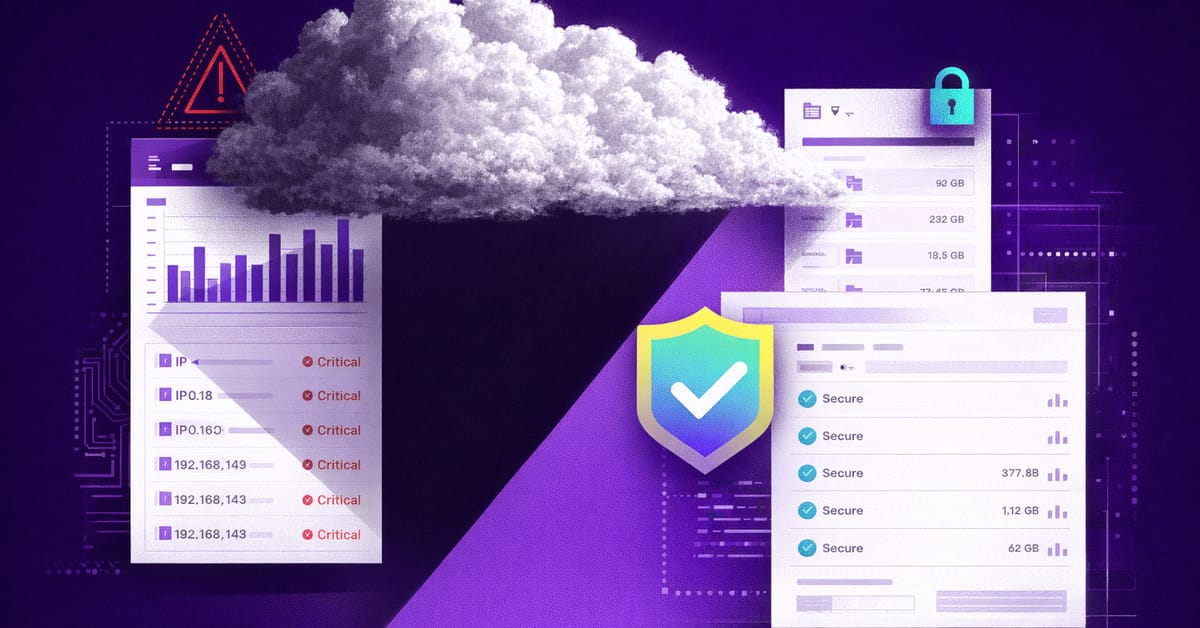
A contractor’s stolen OAuth token grants an attacker access to a cloud storage account. Over the next week, they move laterally through connected business applications, harvest documents from a shared drive, and exfiltrate data to a personal repository, all without triggering a single alert on any endpoint in the environment.
The endpoint tools never saw the attack because it never touched an endpoint. This is the gap that cloud detection and response is designed to close. Cloud detection and response, or CDR, detects and responds to cyber-attacks that unfold across cloud control, data, and management planes.
What follows covers how CDR works, the capabilities to look for, how it compares to endpoint and network detection approaches, and how the N-able security portfolio maps to prevention, detection, and recovery.
Cloud Detection and Response, Explained
Cloud detection and response is a security capability that continuously monitors cloud environments, identifies active threats, and triggers response actions across workloads, identities, and services. The key word is cloud: traditional detection tools inherit assumptions from the network era and treat the cloud as an extension of the corporate perimeter, while CDR treats it as its own detection surface with its own telemetry sources, threat patterns, and response mechanisms.
A practical CDR capability ingests logs from Software as a Service (SaaS) applications, Infrastructure as a Service (IaaS) providers, and identity systems, then correlates signals that would look benign in isolation but indicate compromise when viewed together.
That correlation is the heavy lift, which is why CDR is delivered through Managed Detection and Response (MDR) and Extended Detection and Response (XDR) platforms rather than as a standalone product that teams build in-house. Pulling logs alone is not enough either: what separates CDR coverage from basic cloud log monitoring is the response half of the name, the capability to take containment actions in real time rather than only raising an alert.
How Cloud Detection and Response Works
Cloud detection and response works by pulling telemetry from cloud providers and security tools, analyzing that data for suspicious patterns, correlating signals across sources, and triggering response workflows when thresholds are met. The pipeline runs continuously rather than on a scheduled scan.
Four stages drive the workflow:
- Data collection. CDR platforms ingest logs and events from cloud provider APIs, audit trails, identity providers, SaaS applications, and workload agents. Sources typically include AWS CloudTrail, Azure Monitor, Microsoft 365 audit logs, and Google Cloud audit logs.
- Behavioral analysis. Machine learning models establish baselines for normal account behavior, then flag deviations. Rule-based detections catch known attack patterns like impossible travel, privilege escalation, or suspicious API calls.
- Cross-source correlation. A single event rarely tells the whole story. CDR platforms link signals across identities, workloads, and network telemetry to reconstruct the attack path and surface the full scope of compromise.
- Automated response. When a detection crosses a confidence threshold, CDR triggers containment actions: disabling an account, revoking a session token, isolating a workload, or blocking a source IP. Higher-judgment cases escalate to analysts with full context attached.
Together those stages compress the mean time from initial access to containment, which is the metric that determines how much damage a cloud attack actually does.
Why Cloud Detection and Response Matters Now
Compressing that mean time to containment only matters if defenders are actually looking at the right surface, and the attack surface has shifted faster than most detection stacks. 44% of detections now originate from the cloud, matching the broader migration of workloads and identity systems into SaaS and IaaS platforms. SMB and mid-market organizations feel that shift hardest because they rarely have the analyst headcount to watch cloud planes alongside endpoints.
AI compounds the pressure on that already-stretched headcount. Adversaries use AI to automate reconnaissance, compress lateral movement timelines, and shorten the gap between initial access and encryption. Teams that deploy AI and automation in their own security operations contain damage faster than teams relying on manual triage of signature-based alerts. Manual, signature-driven tools built for yesterday’s network perimeters cannot close that speed gap on their own.
Speed determines cost, which is where the financial case becomes concrete. Organizations using AI and automation extensively in security save $1.9 million in breach costs and shorten the breach lifecycle by 80 days compared to organizations that don’t. Earlier detection paired with coordinated response is the operational advantage worth investing in.
Key Capabilities of a CDR Solution
Turning that investment into real coverage means evaluating CDR options on what they actually do, not on how they are labeled. Vendor taxonomy varies, so the question to anchor every evaluation is whether the platform covers the cloud planes attackers target. These are the capabilities worth confirming before signing a contract:
- Multi-cloud telemetry ingestion. The platform should pull data from every cloud provider and SaaS application in the environment, rather than only the one the vendor prefers.
- Identity-centric detection. Cloud attacks almost always involve credentials or tokens. Detection for account takeover, impossible travel, privilege escalation, and OAuth abuse is non-negotiable.
- Cross-plane correlation. Tools that evaluate control-plane, data-plane, and workload signals in isolation will miss attacks that chain across them. Correlation is where CDR earns its keep.
- Automated containment. Detection without response leaves the analyst to act manually during an active incident. Automated password resets, session revocation, and endpoint isolation belong in the core feature set.
- 24/7 coverage. Attackers favor weekends and overnight hours. CDR coverage that depends on business-hours staffing concedes that window.
- Compliance-aligned reporting. Audit-ready reports that map to frameworks like SOC 2, HIPAA, and PCI DSS save significant manual effort during audit cycles.
No single checklist item makes a CDR solution; the combination is what separates a platform that can defend a cloud estate from one that can only alert on it.
Cloud Detection and Response vs. EDR, XDR, and NDR
That same evaluation question applies when positioning CDR against the rest of the detection-and-response family. Cloud detection and response, endpoint detection and response, network detection and response, and extended detection and response all share a common goal, but each covers a different surface. Understanding where they overlap and where they diverge is what prevents tool sprawl and coverage gaps.
| Approach | Primary Coverage | Strongest Against |
| EDR | Endpoint activity (Windows, Mac, Linux devices) | Endpoint malware, ransomware, process abuse |
| NDR | Network traffic and east-west communication | Lateral movement, C2 traffic, network anomalies |
| CDR | Cloud control, data, and management planes | Identity abuse, SaaS attacks, cloud misconfigurations |
| XDR | Unified telemetry across endpoints, network, identities, cloud | Cross-domain attacks requiring correlation |
XDR is the architectural umbrella most organizations end up under because modern attacks rarely stay in a single surface. A stolen credential might move from a cloud identity provider (CDR territory) to a workstation (EDR territory) to lateral movement between servers (NDR territory) within hours. XDR platforms deliver CDR capabilities as part of their cloud coverage rather than as a separate product.
Monitoring Cloud Environments with N-able
That architectural logic shapes how the N-able portfolio is built. Rather than delivering CDR through a single XDR agent trying to do everything, N-able maps coverage to the stages of an attack and hands each stage to a purpose-built product. Stack decisions get practical on that basis: pre-attack hardening, during-attack detection and containment, and post-attack recovery each need their own tool, and the products need to hand off to each other without coverage gaps in between. That progression starts with what the attacker encounters first, the managed endpoint.
N-central
N-able N-central covers pre-attack hardening by closing the vulnerability windows attackers exploit for initial access. N-central drives patching across operating systems and over 100 third-party applications, with Common Vulnerability Scoring System (CVSS) data driving vulnerability prioritization so remediation work reaches the highest-severity gaps first. Alongside that hardening, N-central manages N-able Endpoint Detection and Response (EDR), powered by SentinelOne, which monitors process behavior rather than file signatures and recognizes attacks as they unfold across spawned processes instead of only catching what an initial executable does.
When ransomware lands on an endpoint, EDR can reverse the encryption by rolling back the malicious changes to a pre-attack state within seconds. Further upstream, N-central also manages N-able DNS Filtering, which stops threats earlier in the chain by blocking resolution of malicious domains, with enforcement that follows users whether they sit on the corporate network or connect from a coffee shop. Prevention handles the opportunistic threats; the ones that slip past move into the domain of active detection and response.
Adlumin MDR
Adlumin Security Operations covers during-attack detection and containment across modern threat vectors. Adlumin MDR is built on a highly scalable N-able security platform, correlating signals across logs, identities, endpoints, and cloud workloads under a single investigative surface. The XDR platform includes SIEM, SOAR, and User and Entity Behavior Analytics (UEBA) as native capabilities, so environment-specific baselines and flagged deviations like account takeovers, insider threats, and lateral movement patterns come out of one tool rather than a stitched-together stack.
Suspicious logins or impossible travel patterns trigger automatic password resets or account disablement through SOAR automation. Adlumin MDR delivers 90% automated remediation, isolating compromised endpoints, terminating malicious processes, and revoking credentials so analysts can focus on the cases that need judgment. The 24/7 Security Operations Center (SOC) provides human coverage for those contextual cases. Detection and containment handle the attack in flight, but once data is encrypted or destroyed, the priority shifts to getting operations back online.
Cove
Cove Data Protection covers post-attack recovery when detection and containment are no longer enough. Cove sends backups direct to the cloud rather than to a local appliance, with TrueDelta sub-block-level deduplication shrinking backups up to 60x and supporting recovery point objectives as tight as 15 minutes. Frequent backups are only useful if attackers cannot delete them, which is why primary backups are immutable by default, sitting off-network in a private cloud the customer cannot write to, while Fortified Copies add a secondary immutable layer created hourly, retained 30 days, accessible only to designated N-able staff. A multi-tenant console extends that same recovery assurance across distributed environments without proportional administrative overhead.
Taken together, the three products form a connected portfolio: N-central hardens the environment, Adlumin MDR detects and responds during the attack, and Cove supports recovery after the incident. Each phase hands off to the next without the coverage gaps that fragmented toolsets typically introduce.
Close Cloud-Plane Detection Gaps Across the Attack Lifecycle
That handoff discipline matters because cloud detection gaps open simultaneously across identities, SaaS platforms, management planes, endpoints, and recovery workflows, and closing them requires coverage that spans all five. A platform that only watches one surface concedes the rest. The N-able portfolio of N-central, Adlumin MDR, and Cove covers all five across the environments you manage, which is why the three products are built to hand off to each other rather than operate in isolation. To see how they work together in your environment, Contact Us.
Frequently Asked Questions
What is the difference between CDR and XDR?
CDR describes the capability to detect and respond to attacks across cloud control, data, and management planes. XDR is a platform architecture that unifies telemetry from endpoints, networks, identities, and cloud environments to deliver that detection at scale.
Is CDR a standalone product I can purchase?
CDR is not a standalone product category; it is a set of capabilities delivered through MDR and XDR platforms. What matters in evaluation is whether a platform covers all three cloud detection surfaces rather than whether it carries a CDR label.
Why do security teams need CDR coverage now?
Security teams manage cloud identities, SaaS platforms, endpoints, and recovery operations at the same time, often with limited headcount. CDR capabilities delivered through MDR platforms provide 24/7 detection and automated containment that match that operational reality.
When does an organization need MDR instead of EDR alone?
EDR covers endpoint-level detection but does not monitor identity systems, SaaS platforms, or cloud management planes. Teams typically move to MDR when the threat surface expands beyond endpoints or alert volume outpaces analyst capacity.
Do I need both cloud backup and CDR?
CDR and cloud backup serve different phases of the attack lifecycle and are not substitutes for each other. CDR detects and contains active threats during an incident, while cloud backup ensures verified-clean copies exist for recovery.
© N‑able Solutions ULC e N‑able Technologies Ltd. Tutti i diritti riservati.
Il presente documento viene fornito per puro scopo informativo e i suoi contenuti non vanno considerati come una consulenza legale. N‑able non rilascia alcuna garanzia, esplicita o implicita, né si assume alcuna responsabilità legale per quanto riguarda l’accuratezza, la completezza o l’utilità delle informazioni qui contenute.
N-ABLE, N-CENTRAL e gli altri marchi e loghi di N‑able sono di esclusiva proprietà di N‑able Solutions ULC e N‑able Technologies Ltd. e potrebbero essere marchi di common law, marchi registrati o in attesa di registrazione presso l’Ufficio marchi e brevetti degli Stati Uniti e di altri paesi. Tutti gli altri marchi menzionati qui sono utilizzati esclusivamente a scopi identificativi e sono marchi (o potrebbero essere marchi registrati) delle rispettive aziende.