As more organizations move their operations to cloud-based infrastructures, the question of how to keep everything secure becomes more urgent. This article will provide a clear definition of cloud security, explain its core components, and offer actionable best practices to help you navigate this complex landscape.
Cloud Security Definition and Overview
Cloud security is a collection of security measures designed to protect cloud-based infrastructure, applications, and data. It involves a set of policies, controls, technologies, and procedures that work together to shield cloud computing environments from both external and internal cyber threats.
Unlike traditional IT security, which focuses on protecting the perimeter of a self-contained network, cloud security must account for a more distributed and dynamic environment. Because cloud resources are accessed over the internet, security is no longer confined to a physical location. Instead, it relies on a shared responsibility model between the cloud service provider (CSP) and the customer—you. The CSP secures the underlying infrastructure, but you are responsible for securing the data, applications, and access within that environment.
Core Components of Cloud Security
Understanding cloud security means breaking it down into its essential parts. A comprehensive strategy integrates several key areas to create multiple layers of defense.
- Data Loss Prevention (DLP): DLP solutions are designed to protect sensitive information from being leaked or stolen. They monitor, detect, and block the unauthorized movement of data, ensuring that confidential files remain secure whether they are at rest, in use, or in transit.
- Identity and Access Management (IAM): IAM is the framework that ensures only authorized individuals can access the right resources at the right time. It involves managing user identities, implementing strong authentication methods like multifactor authentication (MFA), and enforcing the principle of least privilege, which limits access rights to the minimum level required for a user to do their job.
- Network Security: This component focuses on securing the communication channels within and between cloud environments. It includes technologies like cloud firewalls, DNS filtering, and virtual private networks (VPNs) to protect against threats that travel over the network, such as DDoS attacks or malware.
Why is Cloud Security Important?
For MSPs and IT professionals, cloud security requires careful planning and ongoing attention. Cloud environments are dynamic and accessible from anywhere, which is great for productivity but challenging for security.
The primary reason cloud security is critical is data protection. Cloud storage often houses sensitive customer information, intellectual property, and financial records. A breach doesn’t just mean data loss; it can result in regulatory implications, operational disruption, and long-term trust considerations.
Furthermore, attack methods and techniques continue to change. Cybercriminals are actively targeting cloud misconfigurations and weak credentials. Without proper security measures, you leave your digital doors wide open to ransomware, phishing, and other sophisticated attacks.
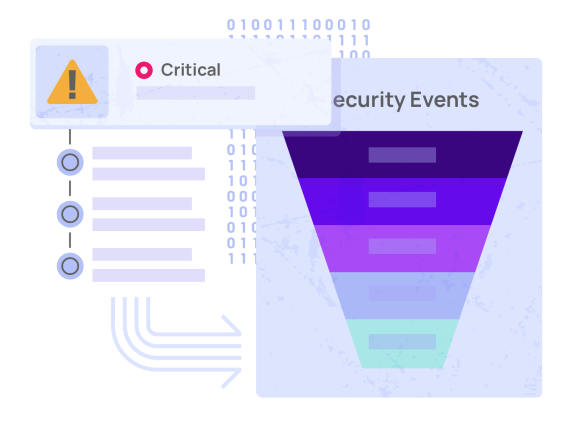
Adlumin MDR: Advanced 24/7 managed security
Cloud Security Best Practices
Enhancing your security posture doesn’t have to be an overwhelming task. Here are some actionable cloud security best practices you can implement:
- Understand the Shared Responsibility Model: Know exactly where your CSP’s responsibility ends and yours begins. This clarity is fundamental to avoiding security gaps.
- Enforce Strong Access Controls: Implement strict IAM policies. Use MFA everywhere possible and regularly review user permissions to ensure they align with the principle of least privilege.
- Monitor for Misconfigurations: Cloud misconfigurations are a leading cause of data breaches. Use automated tools to continuously scan for and remediate configuration errors in your cloud environments.
- Encrypt Data Everywhere: Protect your data by encrypting it both at rest (in storage) and in transit (as it moves across networks). This ensures that even if data is intercepted, it remains unreadable.
- Educate and Train Your Team: Human error remains a significant risk. Regularly train your team and your clients’ employees on security best practices, such as recognizing phishing attempts and using strong passwords.
How N-able Can Help
Navigating the complexities of cloud security is easier with the right partner. N-able offers a suite of security solutions designed to help MSPs and IT teams build true business resilience.
Our solutions empower you with automated vulnerability discovery, allowing you to identify and close network gaps before bad actors exploit them. With unified endpoint management, you can enforce policies and patch vulnerabilities across all endpoints from a single dashboard.
Furthermore, our AI-driven security operations, via Adlumin MDR, provide 24/7 monitoring and threat detection, blending artificial intelligence with human expertise to stop advanced threats in their tracks. By integrating these tools, you can offer your clients a layered defense that evolves as fast as the threat landscape.
Securing Your Future in the Cloud
Cloud security requires continuous adaptation and vigilance. As you continue to leverage the power of the cloud to scale your operations, remember that security is the foundation of reliability.
By understanding the core components of cloud security and implementing robust best practices, you can protect your critical assets and ensure business continuity. With partners like N-able providing the technology and expertise you need, you can confidently navigate the cloud landscape, knowing your data—and your reputation—are secure.