For MSPs and IT professionals, the landscape of cyber threats is a constant, shifting reality. You know it’s not a matter of if an attack will happen, but when. The question then becomes: how prepared is your organization, or your client’s organization, to handle it? This is where understanding your security readiness becomes critical.
This article will explain what a cybersecurity maturity assessment is and why it’s a vital exercise for building a truly resilient security posture.
What Is a Cybersecurity Maturity Assessment?
A Cybersecurity Maturity Assessment is a structured evaluation of an organization’s ability to protect against, detect, respond to, and recover from cyberattacks. Its purpose is to provide a clear, objective picture of your security strengths and weaknesses.
Think of it like a comprehensive health check-up for your security posture. It doesn’t just look for immediate symptoms, it evaluates the underlying systems and habits that contribute to overall health and resilience. The cybersecurity maturity assessment centers on benchmarking an organization’s current capabilities against established best-practice frameworks, such as those from NIST (National Institute of Standards and Technology) or CIS (Center for Internet Security) Controls.
What Does a Cybersecurity Maturity Assessment Involve?
A comprehensive assessment looks at the entire ecosystem of your security program, typically breaking it down into several key domains. Understanding cybersecurity maturity assessments means looking at how these different components interact to create a strong or weak defense.
Here are the key areas an assessment will usually evaluate:
Governance and Leadership
This component reviews whether there is clear ownership and accountability for security within the organization. Does the leadership team actively support and fund security initiatives? Are roles and responsibilities clearly defined? Without strong governance, even the best security tools can fail.
Policies and Processes
Are there documented, repeatable procedures for critical security functions? This includes everything from onboarding new employees securely to managing access controls and handling data. Well-defined processes ensure that security tasks are performed consistently and effectively, reducing the chance of human error.
Technology and Controls
This is where your security tools come into play. An assessment will check if you have the right technologies deployed and, just as importantly, if they are configured correctly. It looks at firewalls, endpoint protection, detection systems, and other controls to see if they are working as intended to protect your assets.
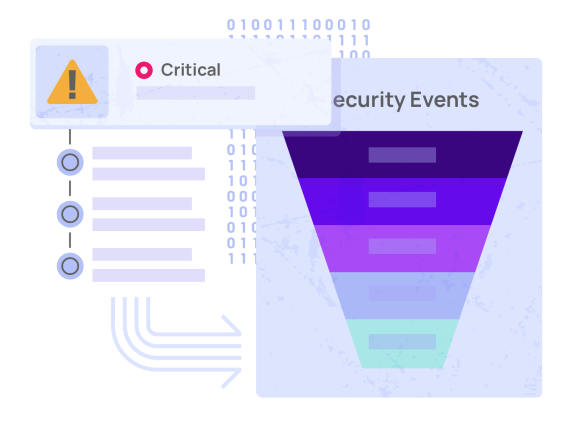
Adlumin MDR: Advanced 24/7 managed security
People and Awareness
Your employees can be your strongest security asset or your weakest link. This part of the assessment evaluates your security awareness training programs. Are employees trained to recognize phishing attempts and other social engineering tactics? A security-aware culture turns your team into a “human firewall.”
Incident Response and Recovery
When a breach occurs, having a clear and tested plan is crucial for minimizing damage and restoring operations quickly. An assessment reviews your incident response plan to ensure you can effectively detect, contain, and recover from a security event.
Why a Cybersecurity Maturity Assessment Matters
For MSPs and IT professionals, conducting a Cybersecurity Maturity Assessment offers several critical benefits:
- Provides a Strategic Roadmap: It moves you from reactive firefighting to proactive, strategic planning. The results give you a clear roadmap for prioritizing security investments and efforts where they will have the most impact.
- Justifies Security Budgets: The objective, data-driven report makes it easier to communicate security needs to leadership and justify budget requests. Instead of talking about abstract threats, you can point to specific gaps in maturity.
- Builds Business Resilience: By taking a holistic view, an assessment helps you build true business resilience—the ability to minimize risk, reduce impact, and maintain continuity in the face of an attack.
- Strengthens Client Trust: For MSPs, offering maturity assessments demonstrates a commitment to your clients’ long-term security. It positions you as a strategic partner invested in their success, not just a vendor selling tools.
Strengthen Your Defenses From the Inside Out
A Cybersecurity Maturity Assessment is more than just an audit; it’s a strategic tool for building true business resilience. It provides the clarity needed to move beyond simply reacting to threats and toward building a mature, proactive, and robust security program.
At N-able, we provide integrated tools and expertise to help you manage, secure, and recover your organization’s or clients’ IT environments. By understanding your cybersecurity maturity, you can better leverage solutions to build a fortified defense and ensure you are prepared for whatever comes next.