
SACR Report 2026 – Ransomware’s New Kill Switch
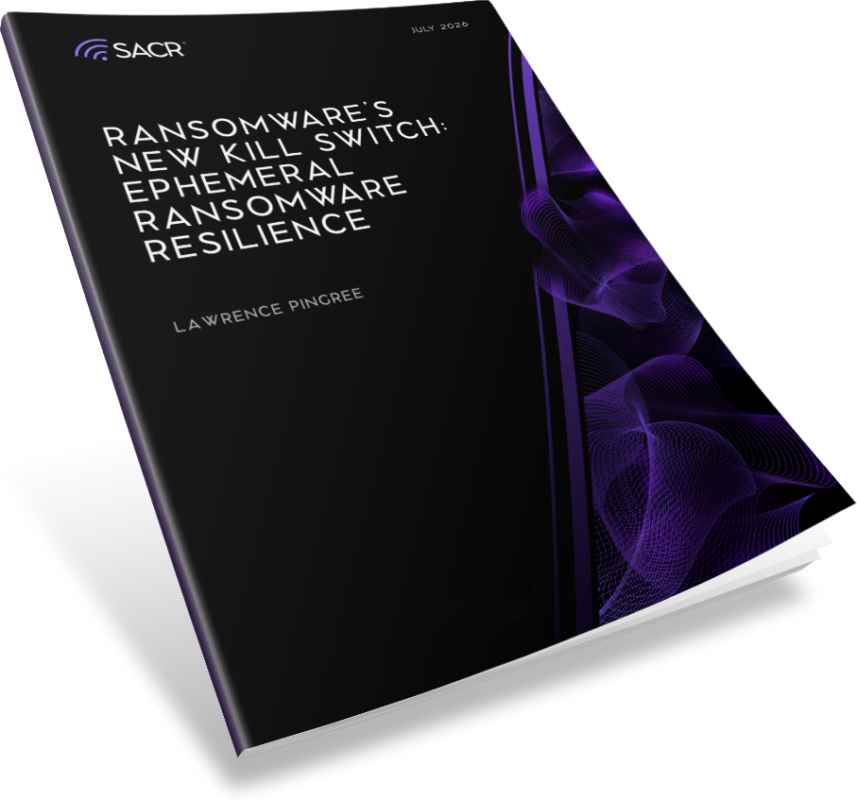
Ransomware’s New Kill Switch: Ephemeral Ransomware Resilience
Attackers now target your backups before ransomware detonation. This report defines Ephemeral Ransomware Resilience (ERR): a new architectural standard for adversarial recovery.

Get the report
Fill out the form to download your copy of Ransomware’s New Kill Switch.
Security & Data Protection
Ransomware’s New Kill Switch: Ephemeral Ransomware Resilience
Attackers now target your backups before ransomware detonation. This report defines Ephemeral Ransomware Resilience (ERR): a new architectural standard for adversarial recovery.
Your backups are being targeted
Ransomware playbooks have evolved. Attackers break in faster but premeditate their attack for weeks, leaving a wide window to compromise your backups before ransomware detonation.
22 sec
24 days
$4.44M
What happens when threat actors reach your management console
Most DR architectures were built for operational failures, not adversarial attacks. They assume no attacker is in the console. Adversarial recovery assumes the opposite: attackers have console access and are compromising backups.
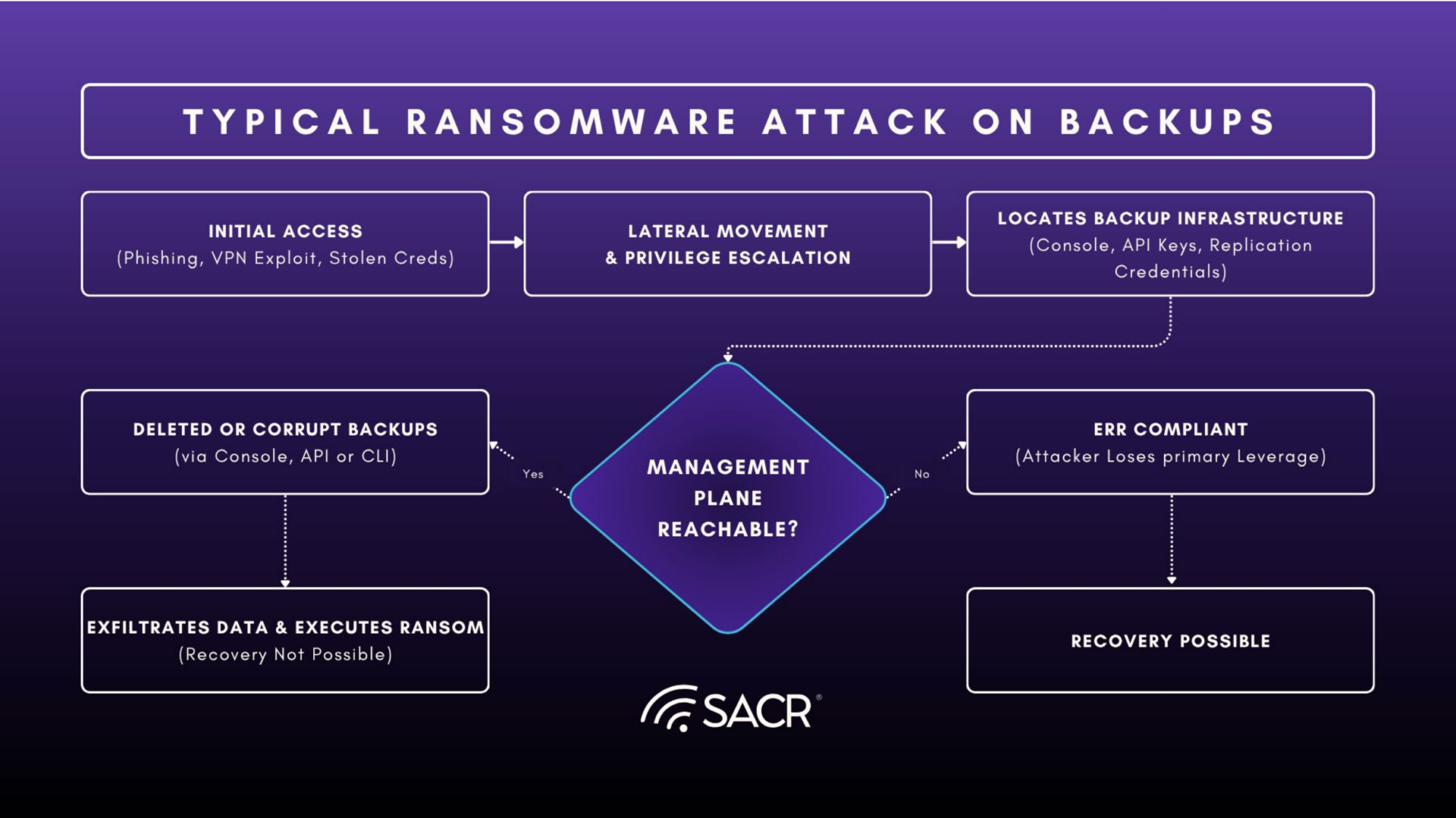
Backup copies targeted before detonation
Backup copies targeted before detonation
Attackers locate and destroy backup sets during dwell time, eliminating recovery options before ransomware detonation.
Restore points carry attacker persistence
Restore points carry attacker persistence
Recovery points created during dwell time may contain malware, backdoors, or footholds that survive the restore.
Recovery infrastructure taken offline
Recovery infrastructure taken offline
Primary infrastructure is unavailable by design. Without ephemeral compute, there’s no environment to run a recovery.
Manual processes fail under pressure
Manual processes fail under pressure
Recovery playbooks built for calm conditions break down when infrastructure is absent and time pressure is extreme.
The attacker's advantage is your blind spot
Recovery architectures that hold up against operational failures assume a safe environment. Adversarial recovery assumes the opposite: attackers have already reached your management plane and acted on it.
Most organizations won’t know until it’s too late to recover cleanly.
You can't ransom what you can't reach.
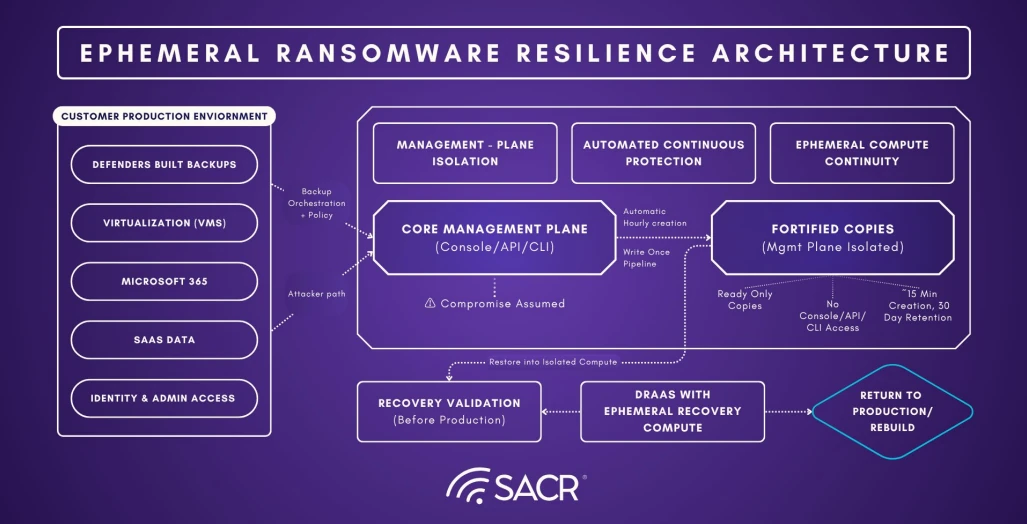
The three requirements of Ephemeral Ransomware Resilience

Management plane isolation

Automated continuous protection

Ephemeral compute continuity
Is your recovery posture ready for an adversarial attack?
Before assuming your DR architecture can handle an adversarial recovery, work through these questions:
- Can backup copies be modified or deleted with admin credentials?
- Are recovery points created automatically and frequently?
- Can operations continue if primary infrastructure goes offline?
- Can you identify clean restore points before recovery begins?
- What SLA governs ephemeral continuity if primary infrastructure is unavailable?
If any of these are unclear, your recovery readiness has gaps worth closing.
What's inside?
This report traces how ransomware evolved from encryption to management-plane targeting, and defines what an architecture prepared for that shift looks like.

The anatomy of modern ransomware

Where traditional DR fails

The ERR framework

How to evaluate your posture
The management plane is the new kill zone
Resilience now depends on recovery architectures built for adversarial conditions. Download the report to understand how ransomware has evolved and why ERR should be part of your procurement standard.
Page information source: Software Analyst Cyber Research 2026