
Why CVSS alone isn’t prioritization anymore

By N-able
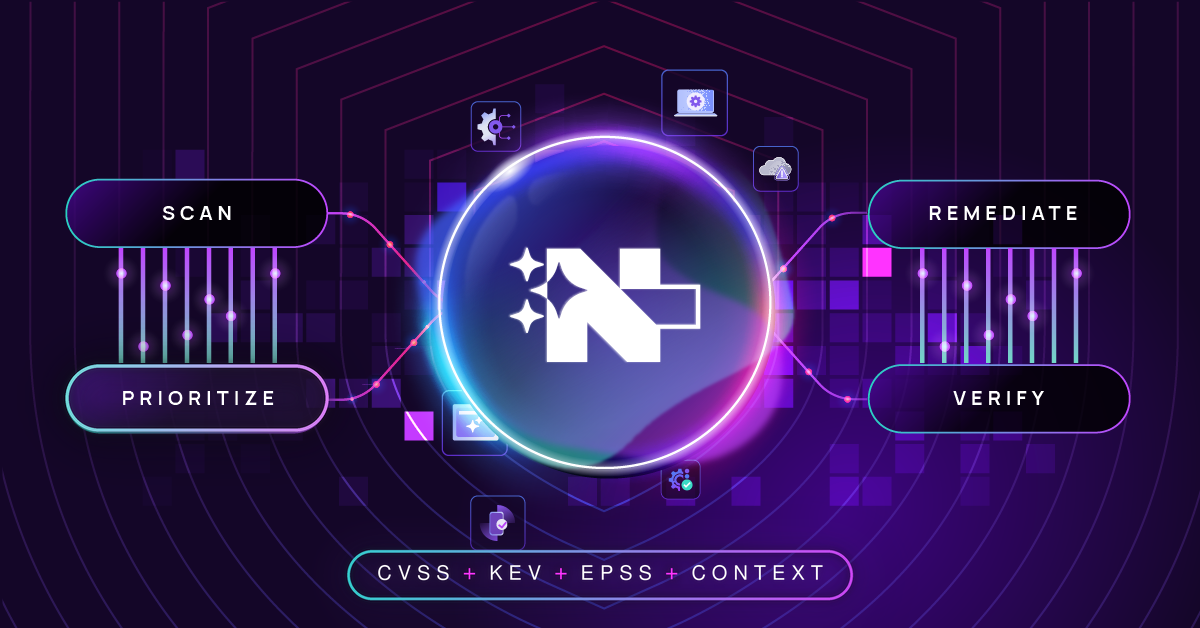
A CVSS score tells you how bad a vulnerability could be. It doesn’t tell you whether that vulnerability matters in your environment right now. And for lean IT teams facing hundreds of CVEs a week, that gap is where real risk hides.
Two vulnerabilities can both carry a CVSS score of 9.0. One is being actively exploited across the globe today. The other has no known exploit and doesn’t touch a single exposed device you manage. Treat them the same, and you’re spending your best hours on the wrong fix while the actual threat sits open.
Severity was never meant to be your whole prioritization strategy. The fix isn’t a new tool to license or another dashboard to check. It’s a single question you can ask the platform you already run.
The problem with static severity scores
CVSS is a useful baseline. It ranks the potential impact of a vulnerability on a fixed scale. But “potential impact” and “real-world risk” aren’t the same thing, and a static number can’t close that distance.
On its own, CVSS leaves you blind to the three things that actually decide what to fix first:
- What’s being actively exploited. The CISA Known Exploited Vulnerabilities (KEV) catalog confirms which CVEs attackers are using in the wild right now. A high CVSS score doesn’t mean a vulnerability is on it. A medium score doesn’t mean it’s safe.
- What’s likely to be exploited next. The Exploit Prediction Scoring System (EPSS) estimates the probability that a vulnerability will be weaponized in the coming weeks. CVSS gives you no read on that.
- What’s even reachable in your environment. A critical CVE on 200 exposed endpoints is a very different problem than the same CVE on one isolated machine. Live device context is the only thing that tells them apart.
When your team sorts a CVE list by CVSS and works top to bottom, you’re treating theoretical severity as if it were live risk. Attackers don’t work that way. They go straight for what’s exploitable and reachable, and they get there fast
What real prioritization costs you today
Layering those three signals on top of CVSS sharpens the picture immediately. You stop chasing severity and start addressing exposure. That’s the difference between busy work and risk reduction.
Here’s the catch. Pulling those signals together by hand is senior security analyst work. It means cross-referencing KEV entries, interpreting EPSS scores, and correlating both against a live inventory of devices. Do that for every CVE, every week, and prioritization becomes the single biggest hidden cost in your vulnerability operations. Most IT teams don’t have a senior analyst to spare, and the ones who do can’t afford to burn that expertise on weekly triage. That’s the work N-zo takes off their plate.
How the N-zo Vulnerability Expert closes the gap
That’s exactly what the N-zo Vulnerability Expert™ does inside N-central™ and N-sight™.
Instead of asking your team to gather and correlate the signals by hand, the Vulnerability Expert does it automatically and answers your questions in plain language. Ask it directly:
- “Which vulnerabilities should I address first today?”
- “How many of my devices are affected by this CVE, and which ones?”
- “Which devices have CVEs with active exploits?”
- “What should my team focus on this week?”
You get a ranked, context-aware answer in seconds. No spreadsheets. No manual cross-referencing across three data sources and a device inventory. No security-analyst interpretation required. The Vulnerability Expert also delivers plain-language CVE explanations and context-aware remediation plans, including mitigation guidance when patching isn’t an option.
Because it’s built into the N-central and N-sight platforms, the intelligence lives where your team already works. There’s no bolt-on tool to license, no data to map, and no console to switch to.
The outcome: senior-level decisions, without senior-level headcount
The bottleneck in modern vulnerability management isn’t detection. It’s decision-making at speed and scale. When every technician can make a senior-level risk call in a single prompt, that bottleneck disappears.
With the N-zo Vulnerability Expert, your team gets to:
- Focus remediation effort on what’s genuinely exploitable, not just what scores high
- Skip hours of manual triage every patch cycle
- Act with confidence, backed by exploitation and probability context, not guesswork
- Reduce exposure windows without adding staff or expertise
Static CVSS scores had their moment. But prioritization now demands real-world context, and your team shouldn’t have to assemble it by hand.
See how the N-zo Vulnerability Expert turns severity scores into confident decisions. Start a free trial of N-central or N-sight, or talk to our team today.
Next in this series: when a patch fails, here’s how N-zo tells you why.
© N‑able Solutions ULC e N‑able Technologies Ltd. Todos os direitos reservados.
Este documento é fornecido apenas para fins informativos e não deve servir de base para aconselhamento jurídico. A N‑able não oferece nenhuma garantia, expressa ou implícita, nem assume qualquer responsabilidade legal ou responsabilidade pela precisão, integralidade ou utilidade de qualquer informação nele contido.
As marcas N-ABLE, N-CENTRAL e outras marcas registradas e logotipos N‑able são de propriedade exclusiva da N‑able Solutions ULC e da N‑able Technologies Ltd e podem ser marcas legais comuns, registradas ou de registro pendente com o Escritório de Marcas e Patentes dos EUA e com outros países. Todas as outras marcas comerciais mencionadas neste documento são usadas apenas para fins de identificação e são marcas comerciais (e poderão ser marcas registradas) de suas respectivas empresas.