
How to Scale Your MSP Business: A Practical Growth Guide for MSPs

By N-able
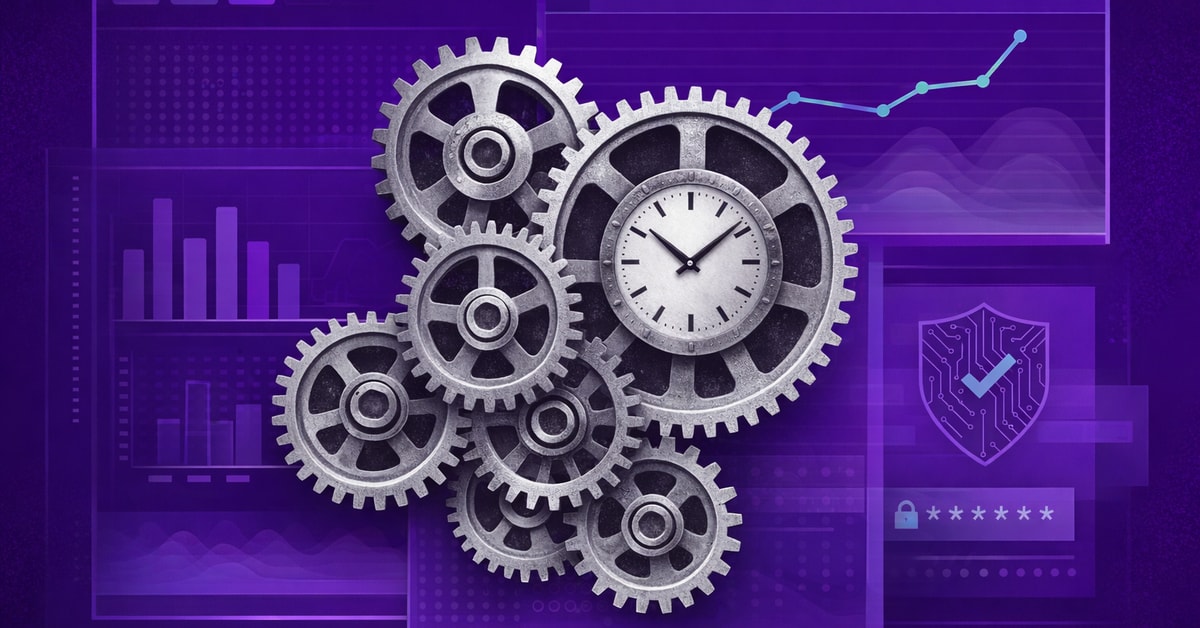
What got you to 50 clients breaks at 200. Growth without operational maturity creates breaking points. More clients, same processes, inevitable failures. Revenue grows, but complexity kills margins faster than you can hire.
MSPs searching for growth strategies need more than generic advice. You need a roadmap that addresses the real bottlenecks: fragmented tools, manual workflows, security gaps, and revenue models that don’t scale.
This guide covers vendor consolidation, automation deployment, security service expansion, vertical specialization, and recovery capabilities that separate premium MSPs from break-fix shops.
Stop Letting Tools Fragment Your Operations
Vendor consolidation delivers measurable operational efficiency and productivity gains. For growth-stage MSPs managing 50-200 SMB clients, that means technicians stop context-switching between platforms and start solving client problems. Tool switching kills productivity.
The majority of MSPs have pursued vendor consolidation in recent years to cut complexity and reduce risk, not save pennies on licensing. You’re not just saving time; you’re reducing business risk while improving profitability.
From Tool Sprawl to Total Control
Running effective IT operations requires capabilities that typically span multiple point solutions: continuous monitoring and network scanning, IT asset management, remote control, software management, device configuration and security policies, patch and vulnerability management, automation and scripting, reporting and analytics, and audit logging. Managing these functions across disconnected tools creates gaps, slows response times, and burns technician hours on platform navigation instead of problem-solving.
N-able N-central consolidates these capabilities under one roof. Yes, this helps reduce costs, but more importantly, with everything in one place your teams and processes work in harmony, driving productivity gains that fragmented toolsets can’t match.
The platform centralizes endpoint management, patch management, vulnerability scanning, and network monitoring in a single console. Automation extends beyond basic scripts through a no-code drag-and-drop builder and an AI-assisted developer portal that helps technicians build custom workflows without deep coding expertise. REST APIs connect N-central to your existing PSA and documentation tools, while built-in reporting and audit logging support compliance requirements without bolt-on solutions.
This unified approach means fewer vendor relationships, consolidated billing, and technicians who focus on client outcomes instead of juggling platforms. For MSPs scaling operations, that consolidation translates directly to margin improvement: less time managing tools, more time delivering billable services.
Automate Everything That Doesn’t Need Human Judgment
Your technicians likely handle far more endpoints than you realize. That perception gap signals a staffing crisis most MSPs don’t recognize until burnout hits. Automation delivers meaningful operational cost reductions and faster service delivery, fixing the staffing crisis before it lands on your desk.
N-central provides automation everywhere, not just scripts. The platform offers capabilities designed to amplify your team, drive standardization, and increase efficiency:
- No-code drag-and-drop workflow builders that anyone on your team can use
- Self-healing workflows that detect issues and remediate automatically
- AI-assisted scripting that writes code with you
- Automated PSA ticketing that routes issues without manual triage
- 700+ pre-built recipes you can deploy immediately
- Policy-based configurations that apply consistently across all client environments
These capabilities work together with automation built inline and scheduled across your entire operation. Patch management handles Microsoft and 100+ third-party applications across closed networks. Auto-remediation runs before technicians even see tickets. Wake-to-patch handles maintenance windows without manual intervention.
The results speak for themselves: faster ticket resolution and less manual effort. For an MSP handling 1,000 tickets monthly, even modest efficiency gains translate to significant technician hours saved each month.
Stop Thinking Security Services are an Option
SOC adoption continues climbing year over year, and the market has made its expectations clear. Security services now generate premium MSP revenue, making expansion into cybersecurity essential to attract capital partners.
N-able Adlumin MDR provides 24/7 monitoring, automated threat containment, and expert threat hunting without building an internal SOC. The platform analyzes 461 billion security events monthly and automates 70% of threat remediation. Behavioral detection catches threats before they spread, while the 24×7 SOC delivers eyes-on-glass support with full transparency into investigations.
Without security capabilities, you’re competing on price for commodity IT services while high-performing MSPs capture premium accounts.
Specialize or Stay Generic
The vast majority of high-performing MSPs deliver GRC solutions. Regulated industries demand specialized expertise commodity IT providers can’t deliver. The NIST CSF 2.0 provides a foundation for building these compliance-ready services.
Pick a vertical, preferably one with regulatory requirements. Build the expertise that commands premium pricing. Consider these specialization paths:
- Healthcare MSPs: HIPAA compliance, telemedicine platforms, digital patient records, cloud migration for healthcare providers
- Financial services MSPs: Different regulatory frameworks, specialized security requirements, audit readiness
- Manufacturing MSPs: Operational technology integration, supply chain security, industry-specific compliance
Specialized expertise commands premium pricing that generic IT support simply cannot match.
Position as the go-to provider for that industry in your region. Healthcare MSPs consistently outperform general IT providers in growth rates, and vertical specialization drives measurable revenue gains across ranked MSPs. The strategy works because regulated industries require specialized compliance knowledge that commodity IT providers cannot deliver, commanding premium valuations and stronger margins with potential acquirers.
Standardized Tiers Protect Your Business and Theirs
Most MSPs already run subscription-based models with tiered service packages. The real challenge isn’t building the tiers; it’s sticking to them. Clients push for custom exceptions and opt-outs to save money, and MSPs bend the rules thinking they’re winning business. Both sides lose.
When a client opts out of backup services or MDR to trim their monthly bill, they believe they’re making a smart cost decision. They’ll learn otherwise when ransomware encrypts their systems and there’s no clean recovery point. Meanwhile, the MSP has compromised their standard operating procedures, created one-off configurations that complicate support, and absorbed reputational risk if that client suffers a preventable incident.
The hidden cost of exceptions compounds over time. Every custom carve-out fragments your operations, increases support complexity, and exposes you to blame when compromised services fail to protect. Some clients aren’t worth the risk. Firing clients who refuse baseline security standards protects your margins, your reputation, and your team’s sanity.
A disciplined three-tier approach creates natural upgrade paths while maintaining operational consistency:
- Bronze tier: Endpoint management and patch compliance through N-central
- Silver tier: Add 24/7 threat detection and response with Adlumin MDR
- Gold tier: Full lifecycle coverage including Cove Data Protection for immutable backup and rapid recovery
This Before-During-After structure aligns services to the attack lifecycle: N-central handles prevention, Adlumin MDR covers active threats, and Cove ensures recovery when incidents occur. Non-negotiable baseline coverage across all tiers, with enhancements for clients who want deeper protection, builds recurring revenue without operational fragmentation.
Build Recovery Into Your Service Model
Ransomware recovery capability is now baseline, not premium. CISA ransomware guidance recommends maintaining offline, encrypted backups and regularly testing recovery procedures. Cove Data Protection protects 180,000+ businesses with cloud-first backup architecture built for this reality. TrueDelta technology enables backups up to 60x smaller than image-based alternatives, with intervals as frequent as every 15 minutes. Cloud-first architecture supports efficient incremental backups while 30 ISO-certified data centers across 17 countries ensure compliance with local regulations.
Immutable backups, rapid bare-metal recovery, and AI/ML-powered boot verification with 99%+ success rates separate scalable MSPs from break-fix shops.
Protect Client Access Without Adding Headcount
N-able Passportal centralizes privileged access management across your client base. This 100% cloud-based SaaS solution delivers the capabilities you need to scale securely:
- Multi-tenant password management
- Automated credential hygiene
- Network password management with Windows Directory Service Control
- White-label password management as a service
Over-provisioned access and shadow admins create breach vectors that compromise client environments. CISA’s MSP guidance highlights these privileged access risks specifically. Centralized access management with role-based controls and mandatory MFA reduces that attack surface while white-label password management becomes a billable service. Your team manages 200+ clients without adding headcount.
Scale the Way Buyers Expect
Your next 150 clients break what worked for your first 50. Manual processes become bottlenecks. Tribal knowledge doesn’t scale. Owner-dependent operations limit exit valuations.
High-quality MSPs command premium multiples because they built businesses that operate efficiently and predictably before they needed to. Start with vendor consolidation. Add automation next quarter. Build security tiers before compliance becomes urgent. The operators winning exit valuations aren’t guessing; they’re building the business buyers want.
Build the MSP Buyers Want
The path from 50 clients to 200+ isn’t about working harder. It’s about building operations that scale without breaking.
Consolidate vendors now, before fragmented tools create technical debt you can’t unwind. Deploy automation before manual processes become the bottleneck limiting your growth. Add security services before competitors capture the premium accounts in your market. Specialize before you’re forced to compete on price alone.
N-able provides the unified cyber resilience platform MSPs need to execute this roadmap. N-central handles endpoint management and automation. Adlumin MDR delivers enterprise-grade security operations without building an internal SOC. Cove protects client data with immutable backups and rapid recovery. Together, they cover the complete Before-During-After attack lifecycle while reducing the vendor sprawl that kills margins.
The MSPs commanding premium valuations and winning competitive deals built these capabilities before they needed them. Start building yours.
Explore N-able’s MSP solutions or start a free trial to see the platform in action.
Frequently Asked Questions
What’s the most important factor for increasing my MSP’s exit valuation?
Recurring revenue composition drives valuation multiples more than any other factor. High-quality MSPs commanding premium multiples maintain strong managed services and cybersecurity revenue. Convert project-based and break-fix revenue to subscription-based managed services. The FTC recommends NIST as a foundation for building these security practices.
Clean financial records and strong EBITDA to free cash flow conversion matter during due diligence, but recurring revenue percentage is the most critical valuation driver. It determines which buyers pursue your business and at what premium multiple.
How do I reduce client churn without increasing service costs?
Client acquisition costs significantly more than retention. With typical churn rates, most MSPs replace clients faster than they scale.
Focus on proactive service delivery over reactive break-fix approaches. Conduct regular business reviews demonstrating value. Add security capabilities addressing cybersecurity threats as a top SMB concern. Communication protocols preventing slow response complaints reduce churn more cost-effectively than adding staff.
Should I consolidate vendors even if my current tools work?
Yes. The majority of MSPs have pursued vendor consolidation to reduce complexity and improve risk posture, not primarily for budget savings.
The operational efficiency gains from reduced tool switching compound as you scale. Training requirements decrease. Integration incidents reduce. Your team gets time back for complex problem-solving instead of platform navigation. Consolidation becomes more difficult as you grow, so address it early.
What security services should I add first when expanding offerings?
SOC services and Network Security represent the fastest-growing security service categories among MSPs. Security service adoption is accelerating across the MSP industry, with MDR services demonstrating particularly strong growth.
Start with N-able Managed Detection and Response for 24/7 monitoring and automated threat response. No internal SOC required. Then add N-able DNS Filtering™ and vulnerability management from N-central. Advance to broader security operations as client demand grows.
How much automation is realistic for a growth-stage MSP?
Automation delivers measurable operational improvements, but most technicians handle far more endpoints than executives realize. Target efficient endpoint-to-technician ratios with modern automation.
MSP automation strategies should focus on patch management (including Microsoft and third-party applications), auto-remediation workflows for common issues, and automated ticket routing to PSAs. Properly configured automation can achieve meaningful reductions in both average resolution time and manual effort.
© N‑able Solutions ULC e N‑able Technologies Ltd. Todos os direitos reservados.
Este documento é fornecido apenas para fins informativos e não deve servir de base para aconselhamento jurídico. A N‑able não oferece nenhuma garantia, expressa ou implícita, nem assume qualquer responsabilidade legal ou responsabilidade pela precisão, integralidade ou utilidade de qualquer informação nele contido.
As marcas N-ABLE, N-CENTRAL e outras marcas registradas e logotipos N‑able são de propriedade exclusiva da N‑able Solutions ULC e da N‑able Technologies Ltd e podem ser marcas legais comuns, registradas ou de registro pendente com o Escritório de Marcas e Patentes dos EUA e com outros países. Todas as outras marcas comerciais mencionadas neste documento são usadas apenas para fins de identificação e são marcas comerciais (e poderão ser marcas registradas) de suas respectivas empresas.