
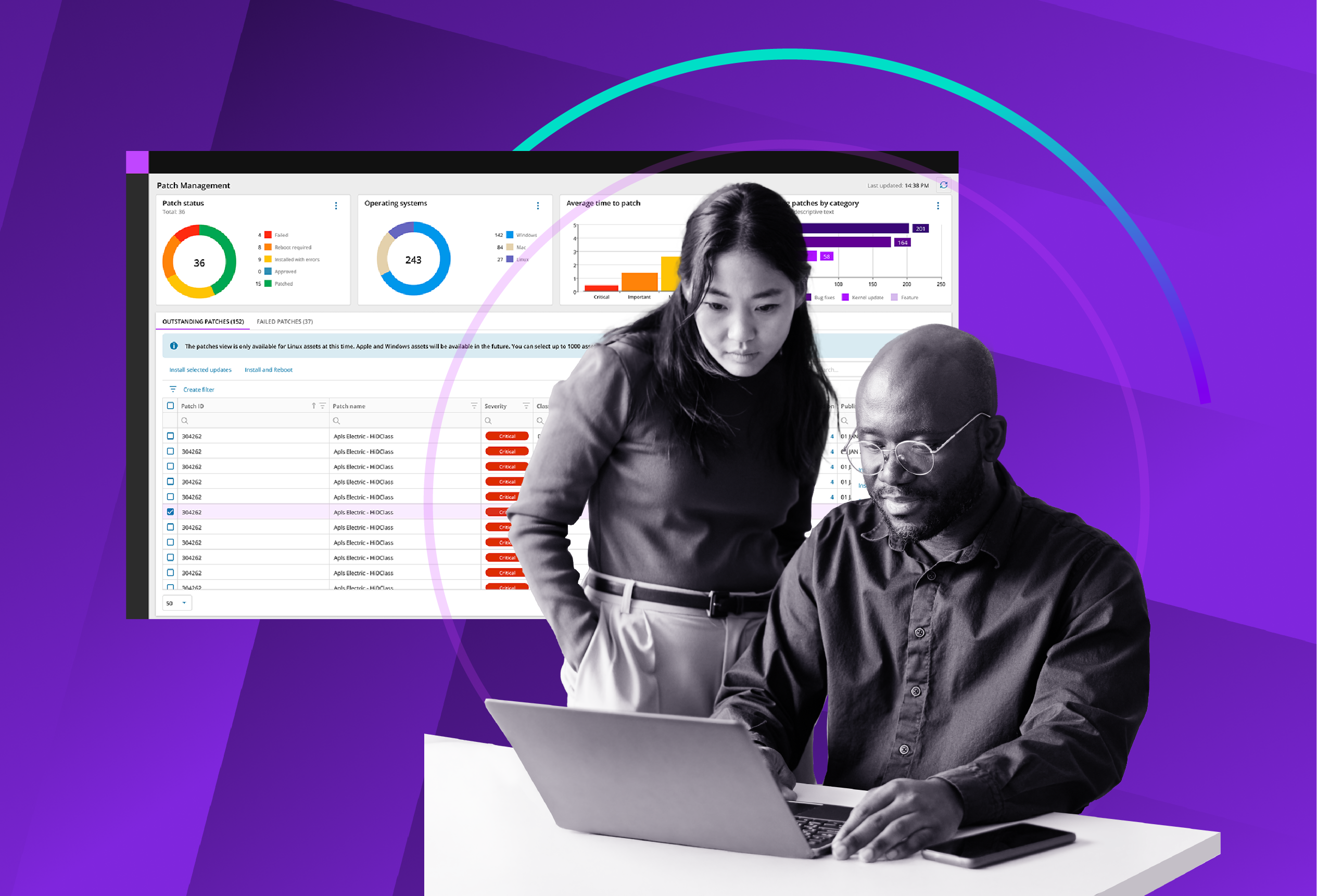
Vulnerability Remediation Don't just find vulnerabilities. Fix them.
Move from detection to action with built-in vulnerability remediation tools from N-able. Identify, prioritize, and resolve threats from one platform to keep your business resilient.
Remediate vulnerabilities, without the hassle

Get complete visibility
Gain a clear view of vulnerabilities across Windows, Mac, and Linux. Get crucial details like severity scoring and CVE data to rapidly prioritize which vulnerabilities to remediate first.
Remediate without the runaround
Consolidate your vulnerability remediation process. Move from identifying and prioritizing threats to resolving them, all from a single unified endpoint management (UEM) tool.
Automate your defense
Automate your patch management and approval process to address vulnerabilities efficiently. Regular patching helps reduce low and medium vulnerabilities, supporting a stronger overall security posture.
Handle the unpatchable
When a patch isn’t available, you still have options. Use mitigating controls, run scripts, adjust firewall rules, isolate assets, or remove vulnerable software with ease. Manage risks smartly and stay secure.
Find the right platform to fit your vulnerability remediation needs

N-central
A scalable solution for MSPs and IT teams managing complex networks.
- Includes Vulnerability Management at no extra cost
- Proactive remediation across all environments
- Target precisely with data-centric remediation
- Powerful automation with AI-powered scripting

N-sight
An easy-to-use SaaS solution for growing organizations.
- Includes Vulnerability Management at no extra cost
- Full endpoint-to-cloud estate protection
- Gold-standard patch reliability
- Automated deployment of security software
Frequently asked questions
What is a vulnerability remediation process?
What is a vulnerability remediation process?
Vulnerability remediation is the process of fixing security weaknesses in your software and systems. This typically involves identifying the vulnerability, prioritizing it based on risk, and then applying a patch, reconfiguring the system, or uninstalling the vulnerable software to eliminate the threat.
Why is it important to remediate vulnerabilities quickly?
Why is it important to remediate vulnerabilities quickly?
Threat actors actively exploit known vulnerabilities to launch cyberattacks. A slow vulnerability remediation process leaves your organization exposed to data breaches, ransomware, and other security incidents. Fast remediation minimizes your attack surface and reduces overall business risk.
Why is a unified vulnerability remediation tool important?
Why is a unified vulnerability remediation tool important?
Using a unified tool like the N-able UEM platform saves significant time and improves efficiency. Instead of using one tool to scan for vulnerabilities and another to fix them, you can manage the entire remediation process—from identification to resolution—in one place.
How does N-able help remediate a vulnerability?
How does N-able help remediate a vulnerability?
N-able integrates vulnerability management directly into our UEM platforms. This allows IT professionals to use a single workflow to identify a vulnerability, assess its severity, and deploy a patch or take other corrective actions using automated remediation capabilities, all from one console.
Resources





Ready to close your security gaps?
See how vulnerability remediation tools from N-able can help you build a more resilient security posture and protect your business.