
DNS Filtering Help stop web threats before they reach a device
Designed to block malicious websites before a connection is made, DNS filtering uses AI-driven domain intelligence to flag threats days before traditional feeds. No hardware required.
Most web threats are stopped too late
New malicious websites and phishing domains appear faster than static blocklists can track. Standard network security protects users inside the office, but remote and hybrid work has changed where users connect, and traditional edge controls don’t always follow them out the door. The gap between when a threat appears and when it hits a reputation-based feed is where attacks happen. DNS filtering closes that gap by blocking threats before a connection is ever established.
What changes when threats are blocked at the DNS layer

Blocked before devices are reached

Protection that follows users

First client protected in minutes

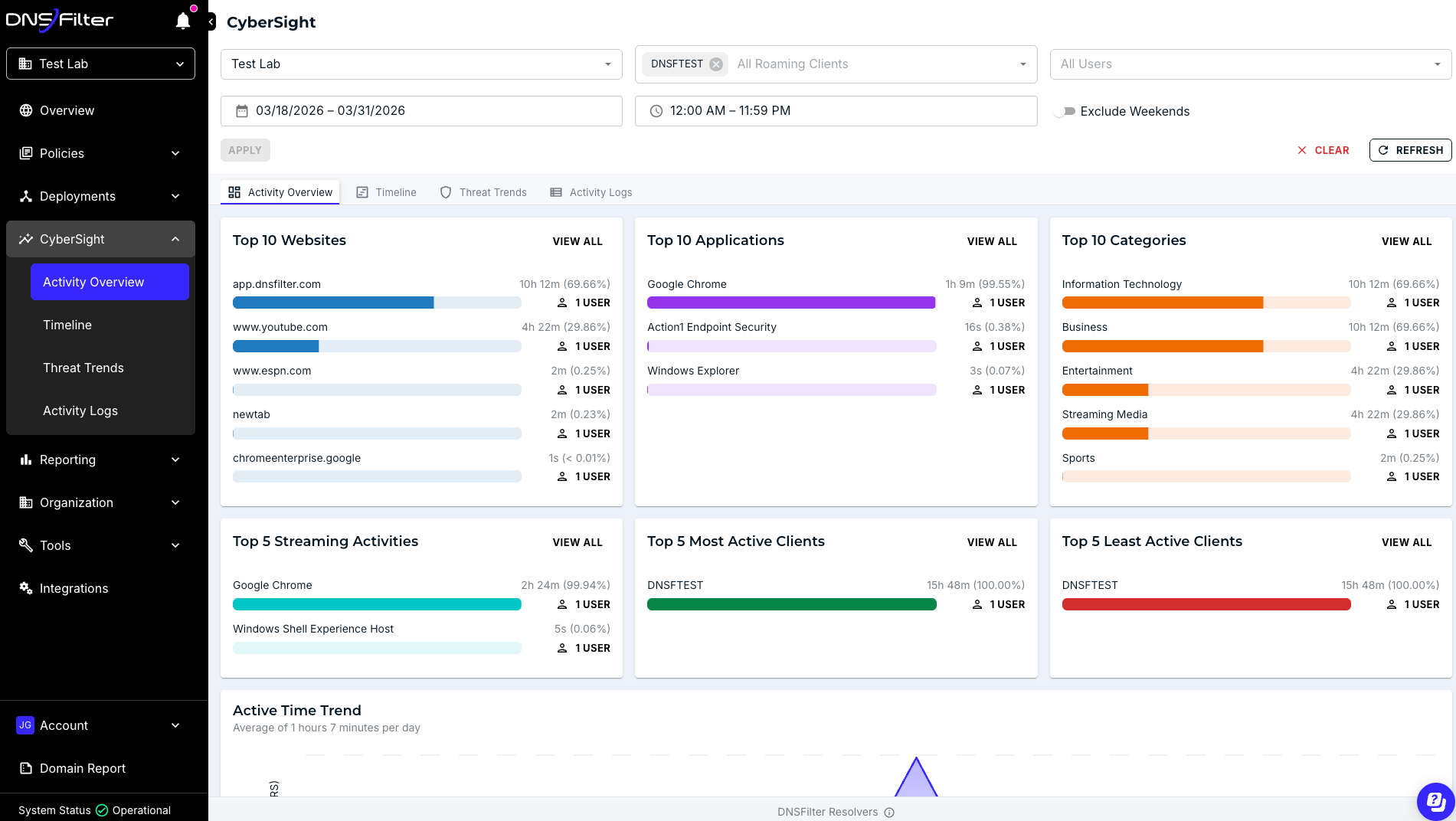
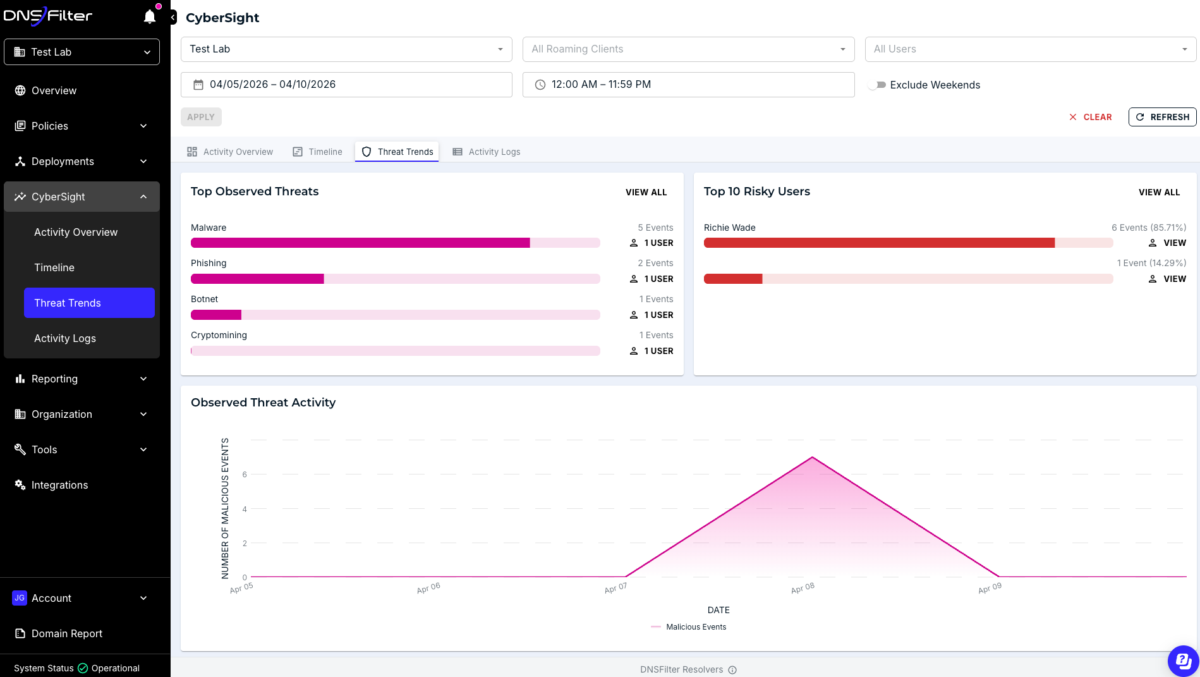
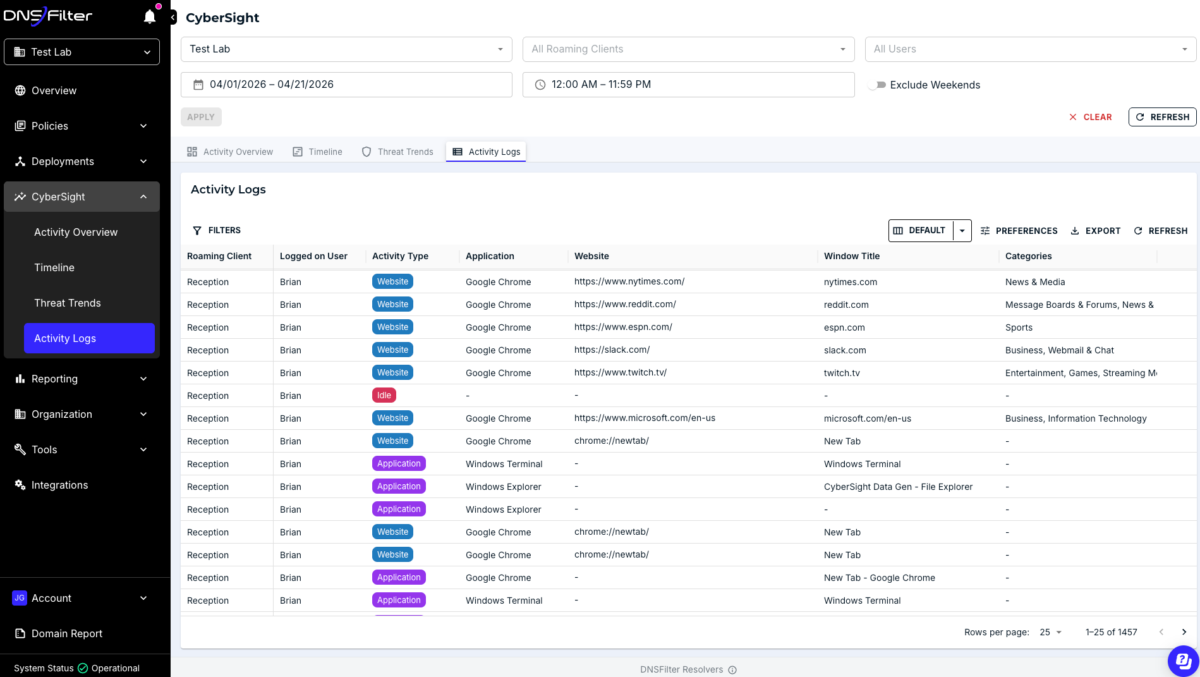
Security value made visible
Protection built into every DNS query
N-able DNS Filtering powered by DNSFilter™ delivers DNS protection at the query level, so threats are designed to be blocked before data reaches a device.
AI-driven domain classification
AI-driven domain classification
Every query is scored in real time against behavioral signals, catching malicious and newly registered domains traditional blocklists miss.
Imagery-based anti-phishing
Imagery-based anti-phishing
Visual analysis detects phishing pages that mimic legitimate brands, adding a detection layer beyond domain reputation.
Global Anycast network
Global Anycast network
Each query routes to the nearest server for fast, reliable resolution with minimal latency impact for users.
Roaming client for off-network devices
Roaming client for off-network devices
A lightweight agent enforces the same policy on Windows, macOS, Android, and iOS, matching on-network protection wherever users connect.
Active Directory and Microsoft Entra ID sync
Active Directory and Microsoft Entra ID sync
Automatic sync of groups and users supports up to 500,000 users, so existing policy structures carry over without manual work.
DNS filtering is a critical part of IT security defense in depth. Being able to protect laptop assets even when they are not on the main corporate network fills a critical hole in security protection.
Ahead of threats before they hit a blocklist
Traditional DNS tools may rely on reputation feeds that update after a threat has already reached victims. AI-driven domain classification identifies malicious and newly registered domains an average of 10 days before they appear on those feeds. That lead time means clients are protected from a threat before it makes the news. DNS-layer filtering can help prevent compromised endpoints from establishing command-and-control callbacks.
I absolutely love [N-able DNS Filtering]. Domain lookup, category blocking, category insights, query log, user security — it is all spot on and great for a business of any size.
Steven G IT Director
From the end-user perspective, the ease of use and deployment has garnered positive feedback. The central management dashboard makes managing a multi-tenant environment quick and easy.
Matt H President
Stop the next threat before it starts
See why MSPs and IT teams choose N-able as their DNS filtering solution.